
Search engines rely on an automatic system in order to find and index the sites they show in their search result pages. They do so with the help of computer programs called web crawlers/spiders. Such a system has been proven effective over the time it has been implemented, however, it is not perfect. Without links directing the bots to your site, they may have difficulty finding it. That is why we suggest manual submission of your sites to all the major search engines. Once submitted, it may take two to six weeks for the site to be indexed.
In certain cases, manual submission of the site is recommended and they are:
- Launching a brand new site: when a new site is launched, it may take days, maybe weeks for the crawlers to find it. Submitting the site manually might lead to your site being crawled sooner. It is important to note that it may not always be the case.
- Notably updating a page: When a page's content has been changed substantially, submitting it to the search engine could make the page be re-indexed sooner. It is generally better than waiting for the next scheduled visit from the crawlers, which could take up to six weeks.
- Incomplete indexing: there are some pages on your site that for some reason were not indexed. You can manually submit these pages.
If any of them are applicable, then a sitemap must be submitted to the search engines. In a previous blog, we provided guidelines on how to submit a sitemap to Google. Now, we are going to show you how to submit a site to Yahoo.
Short answer: Yahoo doesn't have its own sign-up form for websites anymore. You register your site with Yahoo by adding it to Bing Webmaster Tools. Yahoo Search runs on Bing's index, so once Bing crawls and indexes your pages, they can show up in Yahoo too. Yahoo's own help page on site submission sends site owners to Bing.
Although Yahoo is the second largest search engine worldwide, they have recently partnered with Microsoft's Bing search engine. Yahoo! search is now powered by Bing and thus, in order to get your site indexed, you will need to submit a sitemap to Bing Webmaster Tools. Once that is done, the site will be indexed in both Bing and Yahoo! Search engines.
A sitemap is a list of all pages that belong to a domain. These could be generated using plugins and sitemap generators or written manually. Once you have a sitemap ready, you will need to submit it via Bing's submission tool.
Last updated: 2026. Sources: Yahoo Help and Bing Webmaster Tools documentation.
📌 What "Registering Your Site With Yahoo" Means Today
Older guides tell you to use Yahoo Site Explorer or a paid Yahoo directory listing. Both are gone. Yahoo has no separate webmaster portal. If you want your site in Yahoo Search, you submit it through Bing.

Yahoo Search Is Powered by Bing
Microsoft Bing handles crawling and indexing for Yahoo's organic results. That's why one Bing Webmaster Tools account covers both search engines.
Do You Need to Submit to Yahoo Separately?
No. There's nowhere separate to submit to. Yahoo also says it can't give you status updates on submissions, so Bing Webmaster Tools is the only place you can actually watch your indexing progress.
✅ When You Should Submit Your Site Manually
Bing will usually find a well-linked site without your help. But a manual submission is worth doing in these situations:
- Brand-new websites. A new domain has no backlinks for crawlers to follow. If you just finished building a website from scratch, submit your sitemap the same day.
- Major content updates. If you've redesigned the site, moved URLs, or rewritten key pages, resubmit the affected URLs so Bing recrawls them sooner.
- Pages that aren't indexed. If a specific page is missing from Bing or Yahoo after several weeks, fix whatever is blocking it, then submit that URL directly.
🚀 How to Submit Your Website to Yahoo Search
The steps are the same ones you'd follow for Bing. For screenshots of every Bing screen, see our Bing Webmaster Tools setup guide.
Step 1: Create or Sign In to Bing Webmaster Tools
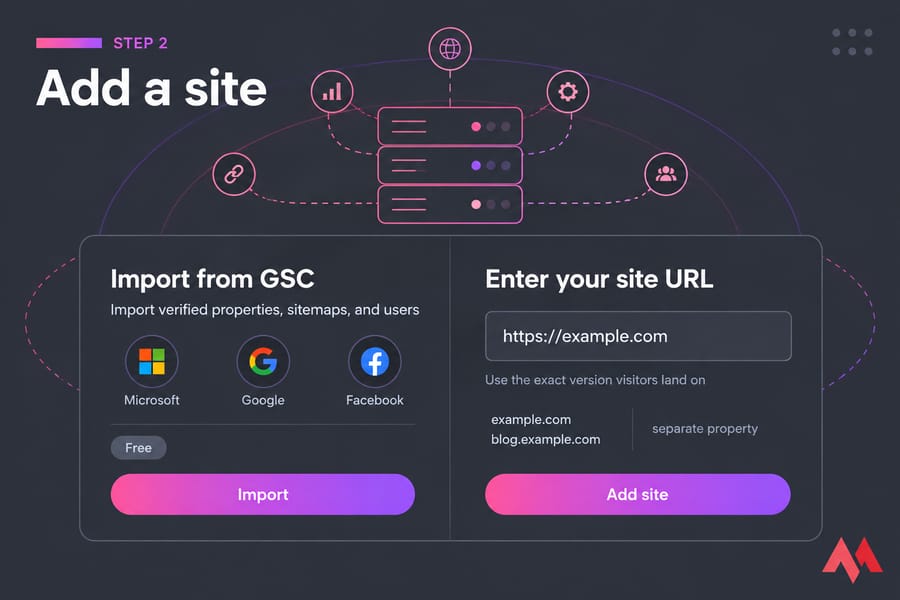
Go to bing.com/webmasters and sign in with a Microsoft, Google, or Facebook account. It's free.
Step 2: Add Your Website
Enter your full site URL, including https://. Use the exact version your visitors land on. Root domain vs. subdomain matters here: blog.example.com counts as a separate property from example.com. If you're unsure which structure fits your site, our guide on subdomains vs subdirectories covers the trade-offs. And if you haven't registered a domain yet, our walkthrough on how to buy a domain name covers registrars, pricing, and WHOIS privacy. You can also buy a domain directly from MonoVM if you'd rather register it in the same place you'll host it.
Step 3: Verify Ownership
Bing has to confirm that you control the site before it shows you any data. Your verification options are covered in the next section.
Step 4: Submit Your XML Sitemap
Open Sitemaps in the left menu, paste in your sitemap URL, and click Submit. This tells Bing about every URL you want indexed at once.
Step 5: Submit Important URLs Manually if Needed
For a handful of priority pages, use the URL Submission tool. Paste in one URL per line. Bing gives each site a daily quota, so save it for the pages that matter most.
🔐 How to Verify Your Site in Bing Webmaster Tools
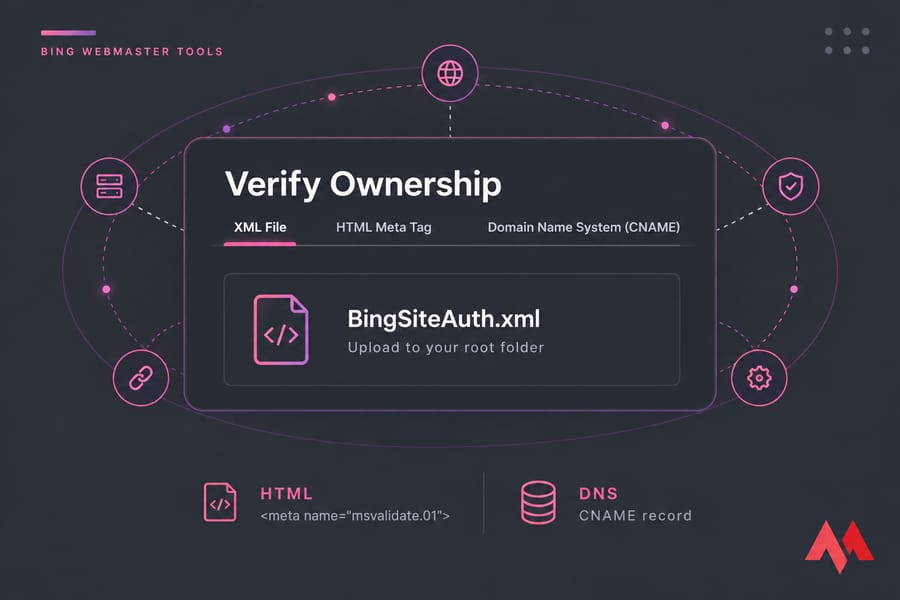
You have four ways to verify. Pick whichever matches the access you already have.
XML File Verification
Download BingSiteAuth.xml and upload it to your site's root folder, so it loads at yourdomain.com/BingSiteAuth.xml. This is easy if you have FTP or file manager access.
Meta Tag Verification
Copy the <meta name="msvalidate.01"> tag into the <head> of your homepage. On WordPress, most SEO plugins such as Yoast or Rank Math have a field for it.
DNS Record Verification
Add the CNAME record Bing gives you at your DNS provider. It's the most durable method because a theme change can't break it. The catch is that DNS changes can take a few hours to take effect.
Import From Google Search Console
This is my preferred option. If your site is already verified in Google Search Console, Bing can import the property, along with its sitemaps and user permissions, in a couple of clicks. You skip verification completely.
🗺️ How to Find and Submit Your Sitemap
An XML sitemap is a machine-readable list of the URLs you want crawled. It helps Bing find pages that are buried deep in your site structure.
Common Sitemap URLs
/sitemap.xml: the most common location/sitemap_index.xml: used by Yoast and Rank Math/wp-sitemap.xml: WordPress core's built-in sitemap
Not sure where yours is? Look in your robots.txt file, because many sites list the sitemap location there. If you're not familiar with the file, see our guide on what is robots.txt.
What to Do if You Don't Have a Sitemap
Install an SEO plugin, or let your CMS generate one. On a static site, a free generator works fine. Keep it limited to canonical URLs that return a 200 status. On WordPress, most plugins auto-generate the sitemap for you — a WordPress VPS gives you the full root access to keep that sitemap refreshing reliably, so Bing always sees the current version.
| Factor | Sitemap Submission | URL Submission |
| Best for | Whole-site discovery | A few priority pages |
| Effort | Set once, updates automatically | Manual, one batch at a time |
| Limits | Up to 50,000 URLs per sitemap file | Daily quota per site |
| When to use | Launch, and after restructuring | New or fixed pages you want crawled soon |
⏳ How Long Yahoo Indexing Takes
Expect to wait a while. Yahoo Help says it can take 6 to 8 weeks or longer for new content to appear in Yahoo Search after you submit it. In my experience, Bing usually picks up pages sooner, and Yahoo results follow later.
A few things slow indexing down: a brand-new domain, few inbound links, thin content, and slow or unreliable servers. Also keep in mind that submission only gets your pages considered. It doesn't guarantee indexing or rankings.
To check your progress, search site:yourdomain.com on Yahoo or Bing, or open the URL Inspection and Search Performance reports in Bing Webmaster Tools.
🩺 Why Your Site Still Isn't Showing in Yahoo Search
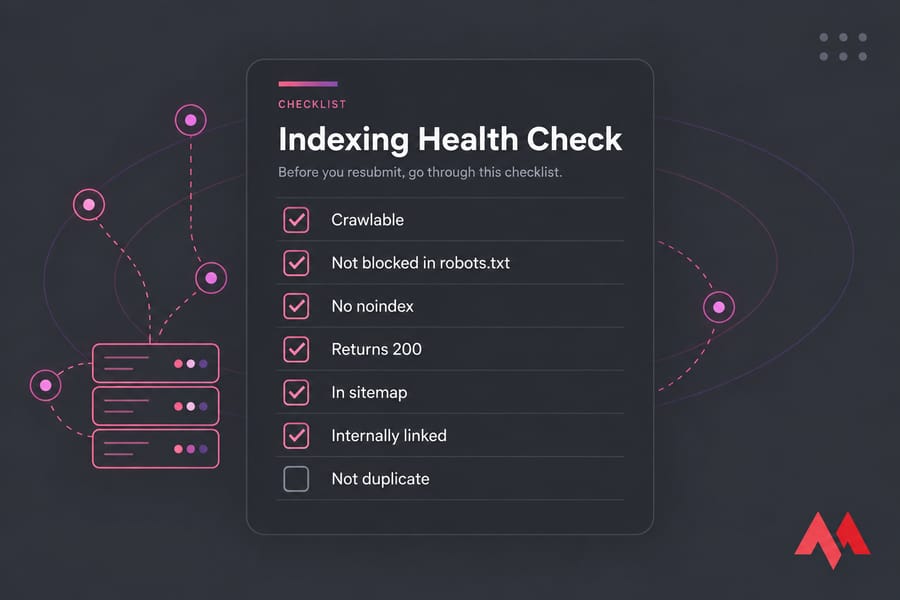
Two months have passed and your site still isn't there? Go through this checklist before you resubmit anything.
robots.txt Blocking
A single Disallow: / line can hide your whole site. I've seen this happen after a staging site went live with its settings unchanged. Here's how to fix robots.txt crawl issues.
noindex Tags
Look for <meta name="robots" content="noindex"> in the page source, and check for an X-Robots-Tag header. In WordPress, make sure "Discourage search engines" is turned off.
Weak Internal Linking
Orphan pages (pages no other page links to) get crawled rarely. Link to new content from related posts, and keep your URL structure SEO-friendly and shallow.
Thin or Duplicate Content
Bing may crawl near-empty pages or copied pages and then choose not to index them. Each page needs a clear purpose. Strong on-page optimization helps after indexing, too.
Redirect and 404 Issues
Redirect chains and broken links use up crawl budget. Run Bing's Site Scan to find them, then fix 404 Not Found errors. Sites infected with malware get dropped as well, so securing your website matters for indexing.
💡 Best Practices to Help Yahoo Discover Pages Faster
- Use internal links. Link every new page from at least two existing ones.
- Keep your sitemap updated. Let your CMS regenerate it automatically. Don't edit it by hand.
- Use URL submission for priority pages. Save your quota for launches and fixes.
- Consider IndexNow. This protocol, launched by Microsoft Bing and Yandex in 2021, notifies participating search engines the moment a URL is added, updated, or deleted. Many CDNs and SEO plugins support it. It speeds up discovery, but it doesn't guarantee faster rankings.