
If you need to reset your VPS password, you can do so easily from your dashboard. Follow these straightforward steps to update your password and regain access to your VPS. Maintaining control over your environment is vital whether you use a high-performance Linux VPS or a flexible server build, and regular updates prevent unauthorized entry.
Step 1: Log in to Your Dashboard
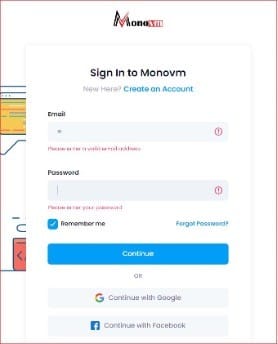
- Visit the Login Page: Go to the MonoVM Dashboard.
- Enter Your Credentials: Log in with your registered email address and password.
Step 2: Access Your Services
- Navigate to the Services Section: Once logged in, locate the "Services" section in the menu on the left side of the page. You can also access it directly by visiting this link.
- Find Your VPS: In the list of your active services, locate the VPS you wish to manage.
Step 3: Select the VPS Service
- Choose the VPS Service: Click on the specific VPS service you want to manage from the list. This will open the detailed management page for that VPS.
Step 4: View VPS Information
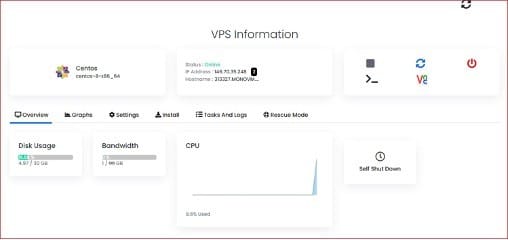
- Scroll Down to VPS Information: On the VPS management page, scroll down to find the section that displays detailed information about your VPS.
- Locate the VPS Information Section: This section is typically positioned at the bottom of the page and includes crucial details such as the IP address, hostname, and other relevant information. If you ever need to change your server setup later, you can review the guide on how to change VPS IP configuration directly.
Step 5: Change the VPS Password
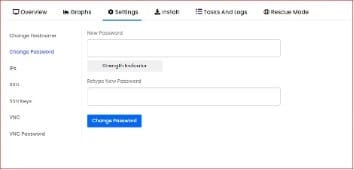
- Open the Settings Menu: In the VPS information section, find the "Settings" menu on the left side of the page and click on it.
- Select "Change Password": Within the settings menu, click on "Change Password" to start the password reset process.
- Enter Your New Password: Type your new password into the provided field. Make sure it meets any specified security criteria (such as length and special characters). If you are administering a Microsoft-based infrastructure, this mirrors the panel tools used to change Windows Server password credentials securely.
- Click "Change Password": After entering your new password, click the "Change Password" button to apply the changes.
Step 6: Restart Your VPS to Confirm the New Password
- Reboot the VPS: To ensure that the new password takes effect, you will need to restart your VPS. This can usually be done from the settings menu or by selecting the reboot option on the VPS management page.
- Log in with the New Password: Once the VPS has restarted, use the new password to log in and verify that the password reset was successful.
Your VPS password is now successfully reset and ready for use. If you encounter any issues during this process, please contact support for further assistance.
💡 Essential Security Tips for Creating Your New Password
When you update your login details from the dashboard, creating a complex key is your primary defense line. Security automation scanning can compromise weak credentials in minutes. Consider these structural rules for strong credentials:
- Avoid Personal Markers: Do not include server hostnames, public IP addresses, or account usernames within your keyphrase.
- Increase Entropy: Use a blend of uppercase letters, lowercase letters, numbers, and system-supported special symbols (like #, $, or @).
- Length is Crucial: Implement a keyphrase of at least 12 to 16 characters to increase the computation time needed for brute-force tools.
⚠️ Common Mistakes When Changing Server Credentials
Many system administrators experience deployment downtime or locked sessions due to small operational oversights during a credential reset. Review these top issues to avoid problems:
| Common Operational Mistake | Technical Impact | Preventative Measure |
|---|---|---|
| Skipping the Server Reboot | The virtualization layers might hold old account credentials until cached tokens drop. | Always utilize the step 6 reboot function within your dashboard to bind configurations. |
| Keyboard Layout Mismatches | Special character outputs shift depending on whether your local client uses UK/US layouts. | Type your chosen word in a plain text editor first to confirm visual characters match. |
| Overlooking App Dependencies | Automated backup systems, cron routines, or API monitoring hooks will instantly fail. | Update environment variables and saved credential configuration blocks right after the reboot. |


Hello, everyone, my name is Lisa. I'm a passionate electrical engineering student with a keen interest in technology. I'm fascinated by the intersection of engineering principles and technological advancements, and I'm eager to contribute to the field by applying my knowledge and skills to solve real-world problems.