
Online gaming is a massive global phenomenon, and millions of users are daily joining the digital bandwagon. From casual mobile apps to complex competitive environments, gaming has evolved significantly since its inception, becoming an essential part of daily life for a vast audience worldwide. This digital revolution has transformed how we interact with media and each other.
While we used to play in the isolated comfort of our homes just a few decades ago, modern technology now provides the opportunity to connect with players across the globe to experience our favorite titles together in real-time. This seamless connectivity became a reality due to infrastructure that rarely receives the credit it deserves: The game servers. Understanding the core infrastructure is the first step for anyone looking to create a website or host a digital community.
In this comprehensive SEO guide, we will dive deep into the technical and practical details including:
- What a game server is and its primary functions
- The technical difference between game servers and traditional web servers
- Crucial factors to evaluate when choosing a game server provider
- How hardware specifications impact your overall gameplay experience
Let’s get straight to the technical breakdown!

🎮 What is a game server?
The most straightforward answer is that a game server is technically similar to any other high-end server. However, the fundamental difference between a game server and a traditional web server lies in the optimization and raw power. These specialized machines are designed to handle constant, real-time data synchronization rather than just serving static files or simple database queries.
The surging popularity of Massive Multiplayer Online (MMO) gaming has paved the way for extreme advancements in broadband technology and the architecture of the games themselves. Modern titles place heavy, non-stop demands on the underlying hardware, requiring a robust VPS server or a high-performance dedicated machine to function without lag.

To effectively handle high concurrent loads, these servers must be significantly more powerful, featuring superior CPU clock speeds, rapid storage, and massive bandwidth. This necessity led to the specialized category of game servers. One critical rule to remember: no matter how powerful your hardware is, if your network has high latency, the hardware performance becomes irrelevant. In many cases, users prefer a dedicated server for gaming to ensure 100% of the resources are allocated to the game engine.
Ultimately, the key to a successful gaming environment is the perfect balance of high server performance and ultra-low latency.
📊 Technical Comparison: Game Servers vs. Web Servers
To better understand the differences, let's look at how these two server types prioritize resources differently:
| Feature | Game Server | Web Server |
|---|---|---|
| Primary Goal | Real-time synchronization | Data delivery (HTTP/S) |
| Latency Sensitivity | Extremely High (Needs <100ms) | Low (Acceptable <2s) |
| CPU Usage | Constant high-frequency processing | Bursts of activity per request |
| Storage Priority | NVMe for fast world loading | SSD/HDD for file storage |
| Bandwidth | Consistent, bi-directional flow | Mostly outbound traffic |
🚀 What’s different about game servers?
The main difference is that server performance must be top-notch to handle the intensive load generated by gamers interacting from all over the world simultaneously. Unlike a web hosting plan where a site might have quiet periods, gaming servers often host active players 24/7. In this environment, downtime or even "micro-stuttering" is not an option if you want to maintain a healthy player base.

A CPU-intensive and IO-intensive server that can process tens of thousands of individual packets and connections at the same time is uniquely suitable for gaming. High performance paired with absolute stability is the ideal combination. If a server experiences frequent "lag spikes" or crashes, players will quickly migrate to a competitor's server.
Furthermore, a gaming server must have exceptional data carrying and processing capacity. While general-purpose servers are comparatively balanced across various tasks, gaming requires specialization. When researching providers, always prioritize those that highlight outstanding single-core CPU performance, as many game engines (like Minecraft) rely heavily on single-thread speed. You can learn more about this in our guide on the best server CPU for Minecraft.
Generally, gaming configurations are far more advanced than general web servers due to the massive graphical and physics calculations they must coordinate. Standard specs often include high-frequency ECC RAM, NVMe storage for rapid read/write speeds, and redundant grid-power systems.
📝 What you should keep in mind!
When selecting your hosting environment, keep this checklist of priorities in mind to ensure a professional-grade setup:
- High-Performance Hardware: Prioritize clock speed over just core count.
- High Stability & Uptime: Look for 99.9% or higher guarantees.
- Physical Proximity: Choose a data center geographically closest to your target audience to lower ping significantly.
- Unmetered Bandwidth: High-traffic games consume data quickly.
- Advanced Firewall Configuration: Essential for blocking malicious traffic.
- Automated System Updates: Keeps the environment secure without manual intervention.
- Server Optimizations: Fine-tuning the OS for gaming performance.
By now, you should have a solid understanding of what game servers are and why they differ from your standard website host. However, there are a few more critical details regarding security. When picking your provider, it is vital to find a plan with DDoS protection included by default.
Because gaming servers are high-traffic hubs, they are frequent targets for malicious actors. An unprotected server can be taken offline easily by a simple attack, ruining the experience for everyone. Always verify that your provider offers DDoS protected VPS options to stay online even during an attack.
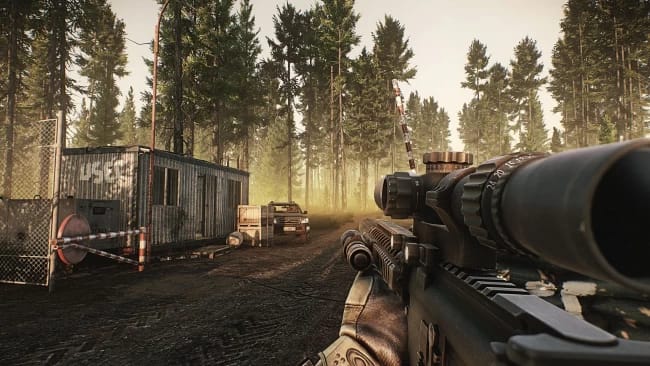
For shooting games (FPS) or competitive titles, the optimum circumstance is to have a ping less than 50ms. If your ping exceeds 100ms, you will likely notice a significant disadvantage. Traditional hosting services do not require this level of speed; in fact, most web pages function perfectly even with a latency of 350 milliseconds.
In contrast, for MMORPG games (Massively Multiplayer Online Role-Playing Games), the requirements are slightly more relaxed, but you should still aim for a ping under 150ms to ensure smooth movement and combat.

Most players would rather spend their time playing than managing server backend details. Therefore, a high-quality host should offer features like automatic updates, intuitive control panels, and 1-click software installations. For example, many Minecraft admins specifically look for specialized Minecraft server hosting to simplify the setup of mods and plugins.
💡 Expert Tips for Game Server Management
- Use a Gaming-Specific OS: Some Linux distributions are stripped of bloatware to maximize resources for the game. Check out the best Linux distros for gaming for more info.
- Regular Backups: Always schedule automatic backups to prevent losing world progress.
- Monitor Your Resources: Use tools to track CPU and RAM spikes during peak player hours to decide when it's time to upgrade.
🎯 On a final note
Your ultimate choice of a game server should be based on a careful assessment of several factors: the specific resource requirements of the games you intend to host, the number of concurrent users, your monthly budget, and the physical location of the data center. While a dedicated server is objectively the best solution for large-scale operations, a high-end gaming VPS is often more than enough for small to medium-sized communities. Choose wisely to ensure your players have the best experience possible!


I'm fascinated by the IT world and how the 1's and 0's work. While I venture into the world of Technology, I try to share what I know in the simplest way with you. Not a fan of coffee, a travel addict, and a self-accredited 'master chef'.